
Triple Oat® Complex
Formulation unique to Aveeno® that delivers a multi-faceted mechanism of action
Oat composition & benefits
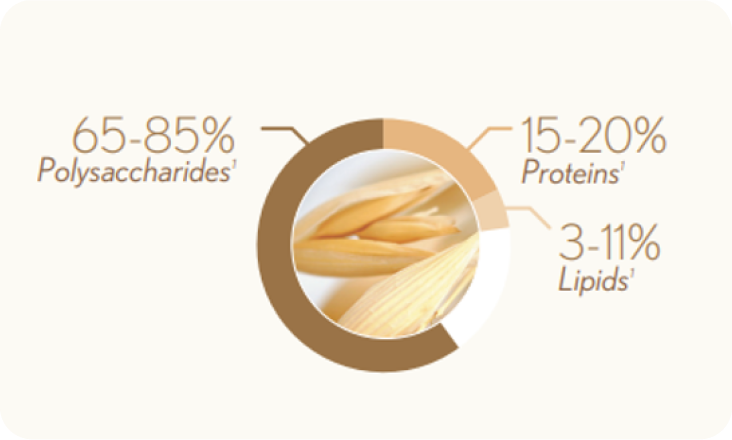
Oat is more than a natural ingredient, it is a powerhouse of potent components
The main components of colloidal oatmeal are polysaccharides (including beta glucans), proteins, lipids, saponins, vitamins (including vitamin E), minerals, antioxidants (including avenanthramides), and other protective compounds.
Beta glucans
Polysaccharide constituents with potent hygroscopic (water holding) qualities.
Avenanthramides & polyphenols
Phenolic compounds that exert strong antioxidant and anti-inflammatory effects.
Oat lipids
Pro-ceramide activity helps restore the skin moisture barrier.
Proteins
Skin pH buffering, water-binding and barrier enhancing hydrophilic amino acids.
Vitamin E
Strong antioxidant and anti-inflammatory properties that help improve signs of aging and promote dry skin repair.
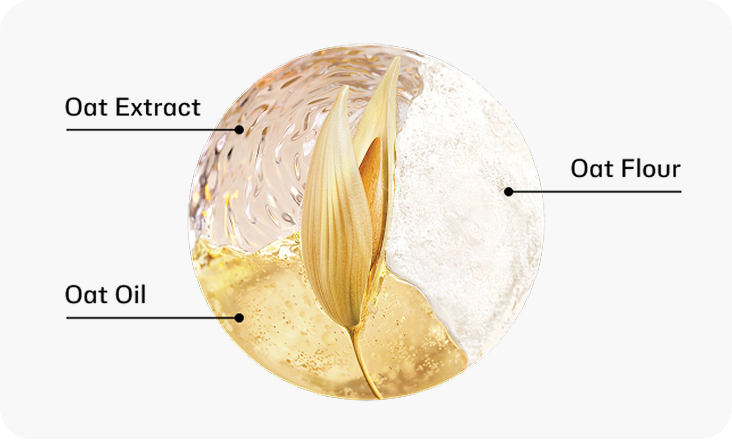
Triple Oat® Complex
Aveeno Baby® harnesses three constituents of oat. This unique blend of components provides multiple benefits for sensitive pediatric skin.
Combination unique to Aveeno® that helps strengthen and soothe the skin
Oat extract (avenanthramides)
Has anti inflammatory properties
Helps soothe skin and reduce signs of irritation
Oat extract (avenanthramides) helps reduce inflammatory mediators by blocking cytokine release.
Provides antioxidant support, helping defend skin against environmental stressors.
Helps reduce irritation and support the skin’s natural defense mechanisms
Avenanthramides help calm visible redness and support the skin’s natural reactivity threshold.
Helps maintain comfort by soothing irritation within 24 hours of exposure.
Oat oil (oat lipids)
Strengthens the skin barrier from within supporting endogeneous production of ceramides, hyaluronic acid, and filaggrin
Promotes skin's endogenous ceramide production (up to 3× vs untreated)
Oat oil activates PPARα and PPARβ/δ pathways, increasing endogenous ceramide production, preventing water loss and promoting hydration.
Replenishes phytoceramides and contributes lipids essential for barrier resilience.
Keeps the skin barrier fortified
Strengthens barrier integrity by reducing water loss via occlusive & humectant mechanisms.
Helps maintain lipid homeostasis to support optimal barrier function.
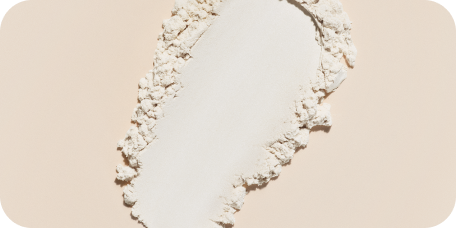
Oat flour (colloidal oatmeal)
Helps support a healthy skin microbiome
Acts as a prebiotic, supporting the growth and metabolism of beneficial skin‑commensal bacteria (e.g., Staph. epidermidis).
Enhances microbial activity that contributes to lactic acid production and pH optimization.
Helps maintain optimal pH & boost hydration‑related pathways
Helps normalize skin pH to the ideal slightly acidic range, supporting healthier barrier function.
Increases HAS2 expression (+220%) and hyaluronic acid production (+43%), improving hydration capacity.


References
Chon S, et al. Planta Med. 2013;79:PE11
Data on file. © Kenvue Brands LLC 2025.
Besingi R, et al. The American Academy of Dermatology Annual Meeting; March 7-11, 2025; Orlando, FL.
Chon SH, Tannahill R, Yao X, Southall MD, Pappas A. Keratinocyte differentiation and upregulation of ceramide synthesis induced by an oat lipid extract via the activation of PPAR pathways. Exp Dermatol. 2015;24(4):290-5. doi:10.1111/exd.12658.
Ilnytska O, Kaur S, Chon S, et al. Colloidal oatmeal (Avena Sativa) improves skin barrier through multi-therapy activity. J Drugs Dermatol. 2016;15(6):684–690.
Reynertson KA, Garay M, Nebus J, et al. Anti-inflammatory activities of colloidal oatmeal (Avena sativa) contribute to the effectiveness of oats in treatment of itch associated with dry, irritated skin. J Drugs Dermatol. 2015;14(1):43-8.
Liu-Walsh F, Tierney NK, Hauschild J, et al. Prebiotic colloidal oat supports the growth of cutaneous commensal bacteria including S. epidermidis and enhances the production of lactic acid. Clin CosmetInvestig Dermatol. 2021;14:73-82. doi:10.2147/CCID.S253386.